Reading Yiwu Market District by District
Yiwu International Trade City — known locally as Futian Market — is a large, multi-district wholesale complex, and the single most useful skill for a buyer is knowing which Yiwu market district holds the categories on your buying list. Buyers who arrive without a route spend days walking, while buyers with a zone plan can compare suppliers in a focused way. This guide explains how to read the market's floor-guide boards, what the signage evidences for specific districts, and how to convert a Yiwu market product list into an efficient walking route. It is a resource for overseas importers, wholesalers and chain-store buyers planning a sourcing trip or briefing an agent.
How to Read the Floor-Guide Boards
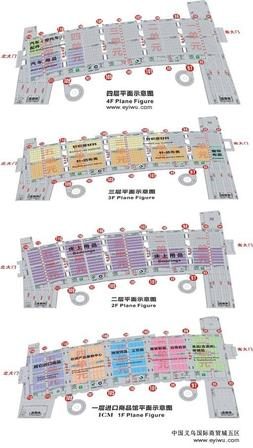
Each district has floor-guide boards and floor plans at entrances and on main walkways. Read them in this order:
- Locate the category on the board's directory, then note the district, floor and block reference it points to.
- Note vertical distribution — a floor plan shows how categories are stacked or spread across levels, so you can work upward or downward rather than backtracking.
- Record booth numbers as you enter an aisle. Booth numbers are the anchor for any follow-up: samples, quotations and re-visits all depend on being able to name the exact booth.
- Photograph the board before you walk in. Signage is static, but your memory of block layouts will not survive a full day of aisles.
For an overview of the wider market before you plan districts, see the Yiwu Market page.
Districts Evidenced by Signage
District 3: Daily Cosmetics and Bags
Floor-guide signage for District 3 identifies daily cosmetics and bags as its categories. Cosmetic buyers should treat this as the entry point for daily-use personal care lines and packaging-led items, while bag buyers can use the same district to begin comparing bag and luggage options. Because bag quality varies widely by material and construction, request samples from several booths rather than committing at the first quote.
District 4: Home and Daily Goods
District 4 is signed as a home and daily-goods area. This is where household and kitchen-related buying tends to concentrate, making it a practical starting point for importers building a mixed household-goods container. Use the floor plan to group subcategories, and keep a running list of booth numbers with the item, quoted price and lead time against each.
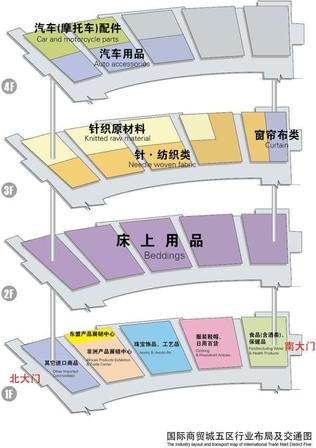
District 5: Bedding, Curtain Fabrics, Automotive Accessories and Imported Goods
District 5's signage covers bedding, curtain fabrics, automotive accessories and imported goods. Textile buyers can review bedding and curtain fabric ranges here, while buyers of automotive accessories and imported lines can cover two distinct lists in one visit. Fabric and bedding evaluation benefits from sampling — confirm colour matching and packaging requirements before production is discussed.
Category Zones Beyond the Signage
Across the market's districts and floors you will also find booths for toys, stationery, jewellery and accessories, bags and luggage, textiles, kitchen and household goods, and holiday and party goods. These categories cluster by zone inside districts rather than following a single published list, so the practical method is to locate them on the floor-guide board for each district you enter and mark the block on your plan. Treat any specific category-to-floor assignment you hear verbally as something to verify on the board before you rely on it.
Holiday and party goods deserve separate planning: seasonal ranges should be locked 90–120 days ahead, so a route that includes seasonal booths should come early in your sourcing calendar. For a broader orientation to how the complex is organised, the Yiwu Market guide is a useful companion read.
Turning a Product List into a Walking Route
Start by grouping your items by zone, not by supplier. Then:
- Group by zone so each district is walked once, in one direction, following the floor plan.
- Collect samples at each relevant booth and record the booth number on the sample bag and in your notes.
- Compare 3–5 options per item on cost, lead time and quality risk before narrowing to one supplier.
- Log MOQ and lead time by category as you go — household goods and hardware typically start lower in minimum quantity than textiles and apparel, and custom runs add time on top of stock lead times.
Mixed multi-SKU and multi-category consolidation is normal here, so your route should end with a consolidation plan rather than a single-supplier decision. Buyers comparing the trade-city approach with other wholesale options may find the Yiwu wholesale market overview helpful before fixing a schedule.
Zone Summary
| Zone | What you find there |
|---|---|
| District 3 | Daily cosmetics; bags |
| District 4 | Home and daily goods |
| District 5 | Bedding; curtain fabrics; automotive accessories; imported goods |
| Category zones across districts and floors | Toys; stationery; jewellery and accessories; bags and luggage; textiles; kitchen and household goods; holiday and party goods |
How an Agent Walks the Route for Remote Buyers
For buyers who cannot travel, an agent converts the same district logic into a documented route. Product selection and purchasing means presenting 3–5 alternative supplier options per item, compared on cost, lead time and quality risk. Supplier screening adds background checks, on-site factory visits and risk assessment where a booth leads to a production site. Sampling and customisation follows — logo printing, colour matching, packaging and multilingual labels — with first samples usually ready in 7–15 days. Quality control then runs across the order, with inspection reports including photos, video and defect lists sent at least three days before shipment, and batch records kept for at least 12 months.
Good route notes are what make a remote sourcing programme work: district, floor, booth number, item, sample reference and quotation in one file. That record is also what allows a second visit, a re-inspection or a repeat order to happen without starting from zero. For questions about planning a route or requesting certificates, contact [email protected].
Related services & guides
Start with a compared quotation
Send us your product list, target prices and quantities — you get compared quotations, not a single take-it-or-leave-it price.
Get a Sourcing Quote