Planning a Yiwu Market Buying Visit: Opening Hours, Rhythm and a Realistic Itinerary
Overseas wholesale buyers often ask us the same question before their first China sourcing trip: what are the Yiwu Market opening hours, and how many days do I need? The honest answer is that the second question matters more than the first. Yiwu Market opening hours are not a single fixed schedule you can look up once and plan around; they vary by district, by floor, by category zone and by season, and they shift around Chinese New Year and other national holidays. If your trip depends on a specific clock time you read somewhere online, confirm it directly with the market or with your sourcing partner before you book flights. What you can plan with confidence is the rhythm of the working day and the number of full working days each district deserves.
Confirm Yiwu Market Opening Hours Before You Book Travel
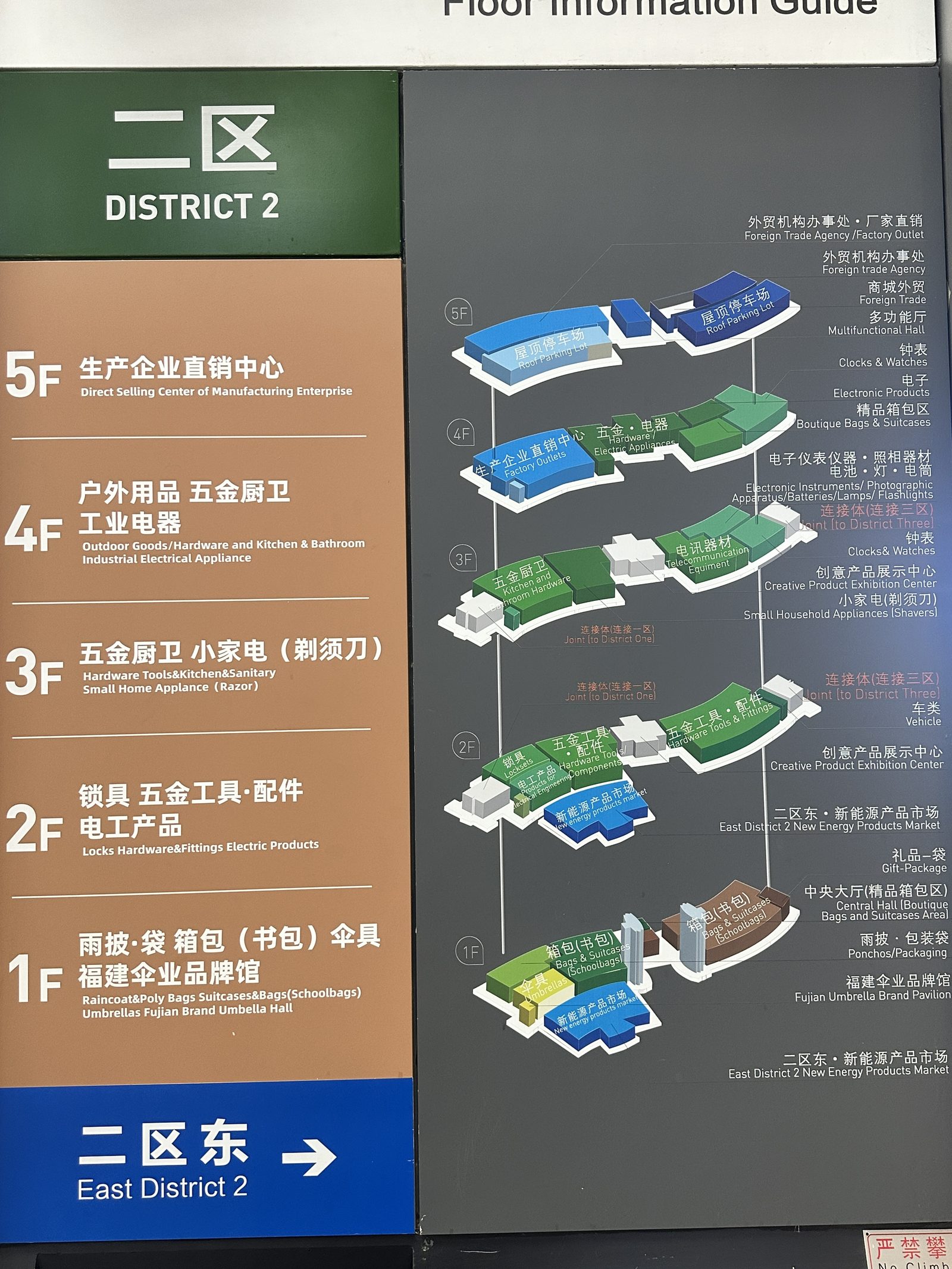
Yiwu International Trade City, also called Futian Market, is not one building with one door and one timetable. It is a set of large, connected district buildings, each with its own mix of categories, its own booth-level working patterns and its own quiet periods. Some booths open early and close early; others keep different patterns because the owner is also running a nearby workshop. Rest days are not uniform across districts and floors, and during holiday periods the whole rhythm changes.
Treat opening hours as something to verify, not something to assume:
- Confirm the current hours for the specific districts on your route, not for “the market” in general. A district guide is more useful than a general article.
- Ask about rest days per floor, because a floor you planned to work may be quiet on the day you arrive.
- Check again in the two weeks before travel. Seasonal shifts and holiday adjustments are common, and a schedule that was accurate last quarter may not be accurate now.
- Ask your agent or supplier contact which day suits their booth. A short message can save a wasted morning.
If you are still building your overall picture of the market, start with our Yiwu Market guide and then narrow down to the districts that match your product list.
Plan Full Working Days per District, Not Hours
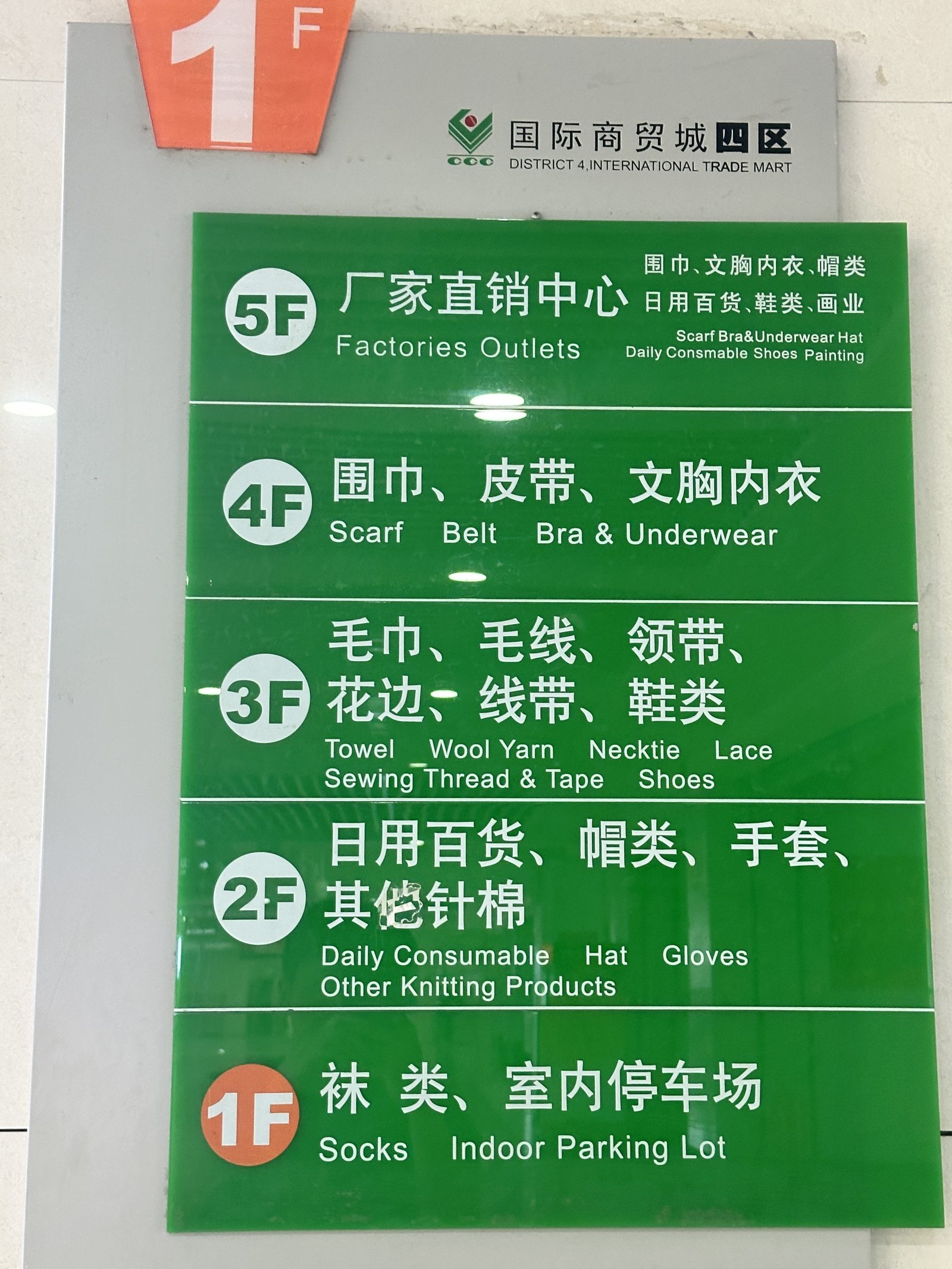
The most common planning mistake is budgeting hours. A buyer arrives thinking four hours in a district is generous, then discovers that the category zone is the size of several city blocks, that booths are numbered in a way that takes time to decode, and that collecting samples is slow. Staff need to find stock, write up a sample slip, discuss pricing tiers and confirm whether a custom colour or logo is possible. None of that happens in five minutes per booth.
A realistic rule is one full working day per major category zone, and two if you are comparing many alternative suppliers or exploring a category for the first time. Household goods, hardware tools, bags, fashion accessories, textiles, toys and small appliances each sit in different zones, and moving between them takes longer than the map suggests. Group your product list by category before you travel, then build a route that does not send you back and forth across the complex. Our Yiwu market district guide is organised for exactly this purpose: match your categories to districts, then sequence the days.
A workable five-day structure
- Day 1: Arrive at the start of the market day, orient yourself, and work booths in your first category zone while staff can still arrange same-day samples.
- Day 2: Continue the same zone or move to the next category cluster on your list; keep collecting samples and booth numbers.
- Days 3–4: Remaining category zones. Resist the temptation to add unrelated categories; each new category costs half a day.
- Day 5: No new categories. Review samples, compare quotations, clarify lead times and confirm orders.
If you only have three days, cut categories rather than cutting the review day. A trip that ends without a comparison session usually ends without a decision.
Work Booths in the Morning
Arrive at the start of the market day and treat the morning as your main working window. Booth staff are freshest, sample stock is easiest to locate, and same-day sample arrangements are far more likely. By the afternoon, several things compete for staff attention: other buyers, internal paperwork, stock checks and deliveries. If you need a customised sample, a colour match or a packaging quotation, raise it in the morning so the booth has time to respond before the day ends.
Use the afternoon for lower-intensity work: walking the remaining aisles, noting booth numbers for a second visit, photographing displays, and comparing what you have already collected. This split keeps your sample pipeline moving without overloading any single booth visit.
What to Bring and What to Record
Small disciplines decide whether a buying trip produces orders or just a suitcase of samples.
- Booth numbers on every sample. Write the district, floor and booth number on the sample bag or tag before you leave the booth. A sample without a booth number is nearly useless once you are back at the hotel.
- Business cards. Carry more than you think you need, and ask for the booth contact and a messaging handle so follow-up does not depend on a single visit.
- A running comparison sheet. For each candidate supplier, record unit cost at your target quantity, lead time, MOQ, customisation options and quality risk observations. Add a photo of the booth and the sample.
- A product list with target quantities. Suppliers quote differently depending on volume, and a clear quantity range keeps conversations grounded.
- Your quality requirements in writing. Note the inspection standard you expect, labelling and packaging requirements, and destination-market compliance needs so quotes are comparable.
The comparison sheet is the single most valuable document you will produce. It turns a pile of impressions into a decision.
Keep the Last Day for Review and Confirmation
Reserve the final day for sample review, quotation comparison and order confirmation. Lay out the samples by category, score each supplier on cost, lead time and quality risk, and shortlist two or three per item. Confirm which suppliers can meet your packaging and labelling requirements and which need a follow-up sample. Where you are ready, confirm the order and agree the next steps in writing.
This is also the day to think about timing. Holiday and seasonal ranges should be locked roughly 90 to 120 days ahead, so if you are buying for a peak season, the visit is your starting point, not your finishing line. Production and purchasing typically run 15 to 45 days after order confirmation, with inspection before shipment and consolidation afterwards, so a standard order cycle of 30 to 90 days is normal. A clear confirmation on the last day of your trip is what protects that timeline.
If You Cannot Travel: The Remote Version of the Same Route
Not every buyer can spend a week in Zhejiang, and that is not a barrier. A sourcing agent can walk the same district route on your behalf, with scheduled video calls from the booth so you can see the product, ask questions directly and compare alternatives. Samples can be couriered to you, and the comparison sheet can be built remotely using the same fields: cost, lead time and quality risk. The discipline is identical; only the mode of attendance changes.
For buyers who do travel, the practical summary is simple: confirm current hours for your specific districts before booking, plan full working days rather than hours, work booths in the morning, record a booth number for every sample, and keep the last day for review and confirmation. For a broader overview of the market and how the districts fit together, see our Yiwu Market page.
Related services & guides
Start with a compared quotation
Send us your product list, target prices and quantities — you get compared quotations, not a single take-it-or-leave-it price.
Talk to a Yiwu Sourcing Agent