How to Buy from 1688 as an Overseas Buyer
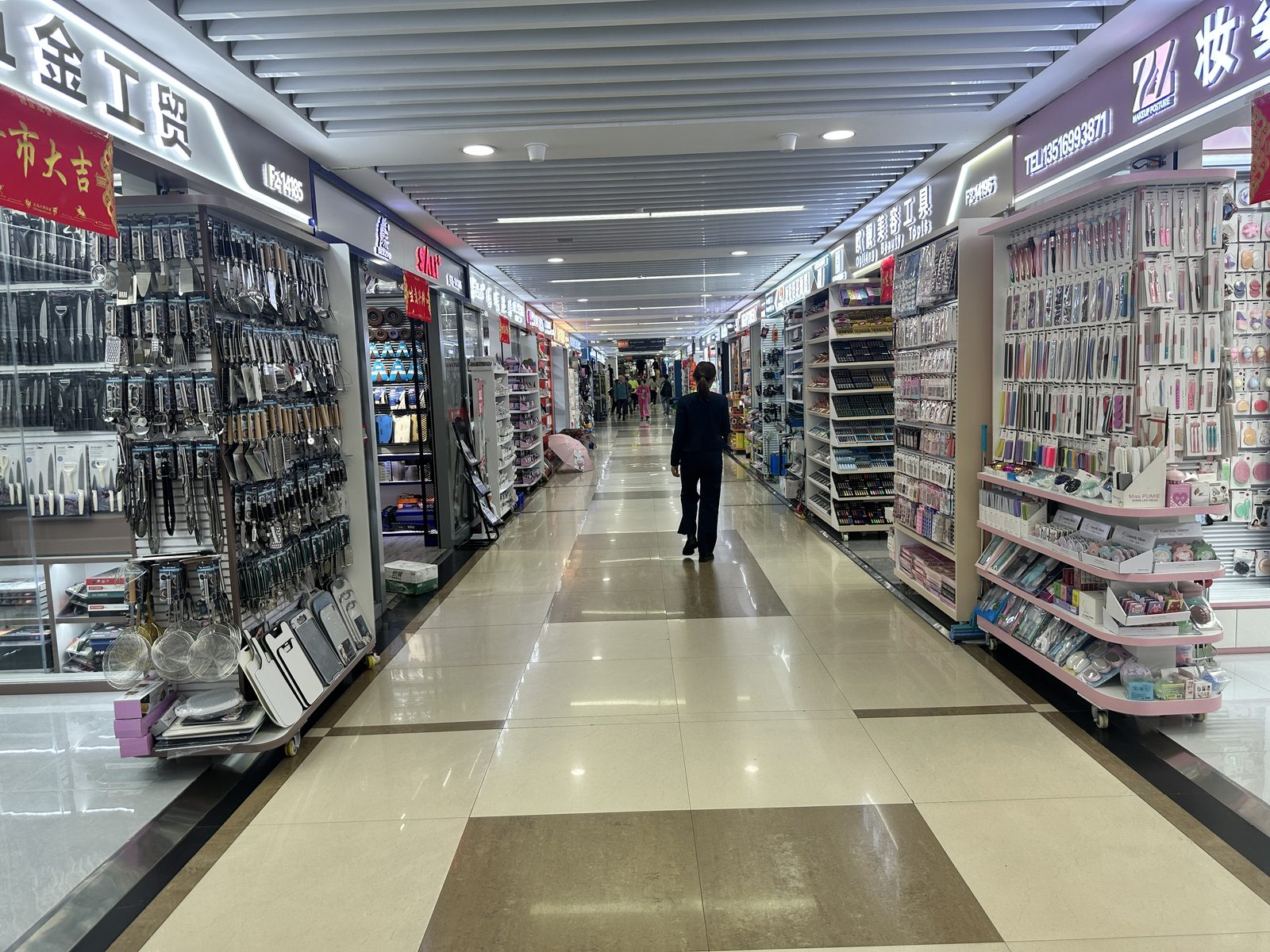
If you have spent time searching for Chinese suppliers, you have almost certainly landed on 1688. Learning how to buy from 1688 is one of the most useful skills for an overseas wholesale buyer, because the platform often shows the same factories and trading companies that supply the stalls in Yiwu — at prices set for the domestic market. The complication is that 1688 was never designed for buyers outside China. This guide explains what the platform actually is, where foreign buyers get stuck, and how a purchasing agent route works in practice for importers, wholesalers, chain stores and distributors placing bulk orders.
What 1688 Actually Is
1688 is the domestic wholesale marketplace run by the Alibaba group. It is built for Chinese buyers trading with Chinese sellers: retail shop owners, small distributors, e-commerce sellers and purchasing staff. Three characteristics follow from that, and they matter more than any feature list.
- Listings are in Chinese. Product titles, specifications, unit conventions and seller policies are written for a domestic reader who already understands the category.
- Prices assume a domestic buyer. A quoted unit price typically assumes payment through domestic Chinese payment methods and delivery to an address inside China. It is not an export price and does not include export packing, export cartons, documentation or international freight.
- Sellers ship inside China only. The default fulfilment model ends at a Chinese address. There is no export declaration, no certificate of origin, no bill of lading and no consolidated container behind a standard 1688 order.
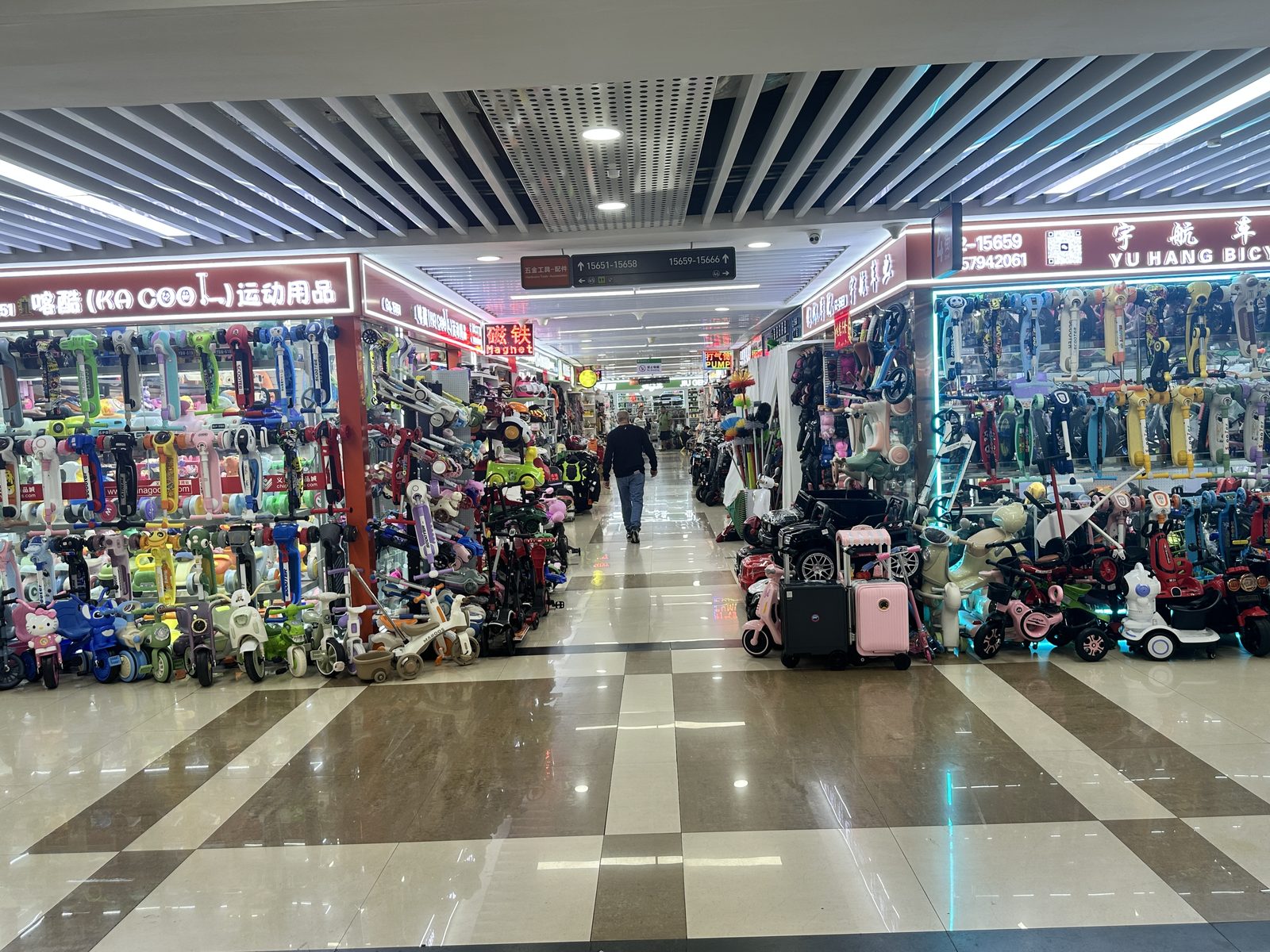
None of this makes the platform unsuitable for foreign buyers. It simply means the export layer has to be added by someone. That is the role of a 1688 buying agent working from a Yiwu base, and it is also why many buyers compare channel options before committing — see our breakdown of 1688 vs Yiwu Market for the trade-offs.
The Four Barriers for Foreign Buyers
1. Language and specification mismatches
A listing title may describe a product in terms that do not map cleanly onto your market's expectations. Material grades, dimensions, plug types, packaging formats and labelling requirements are often implied rather than stated. A buyer reading a translated page can order something that is correct in the seller's domestic context and wrong for export. Specification confirmation has to happen with the seller directly, in Chinese, before any deposit is paid.
2. Payment
Domestic Chinese payment methods dominate on the platform. Overseas cards and international transfers are not the normal path, and even where a workaround exists, it does not give you a purchase record you can use for an export transaction or a claim if something goes wrong. Payment has to be handled by an entity operating inside China.
3. Delivery
The seller's responsibility usually ends when the goods reach a Chinese address. There is no export-grade packing, no wooden pallets where needed, no commercial invoice, no packing list, no certificate of origin, no customs declaration and no booking. Goods that arrive at a Chinese warehouse still have to be received, checked, repacked and shipped internationally.
4. Verification
Listing photos are marketing material, not the goods. Colour, finish, weight, material and packaging can all differ from the images once production runs. For an overseas buyer, the gap between the photo and the carton is the single largest source of loss, and it cannot be closed from a screen.
The Agent Route, Step by Step
A purchasing agent closes all four gaps without the buyer needing a Chinese entity, a Chinese bank account or a Chinese address. The sequence for a 1688 order runs as follows.
Step 1 — Send links or product photos
You send the 1688 listing links, or photos and specifications if you found the item elsewhere. For each item, the agent identifies the seller, checks whether the seller is a factory or a trader, and reviews whether the listing is suitable for export at all.
Step 2 — Confirm the real export specification and price
The agent contacts the seller in Chinese and confirms what the price actually covers: the exact material and finish, the unit and carton configuration, whether domestic freight to Yiwu is included, the minimum quantity the seller will accept, what customisation is possible (logo, colour, packaging, multilingual labels and instructions) and a realistic production lead time. Where several sellers offer the same item, the agent can compare three to five options on cost, lead time and quality risk rather than defaulting to the first listing.
Step 3 — Purchase on your behalf
Once you approve the confirmed specification and price, the agent places and pays for the order inside China. You receive a purchase record rather than a card transaction against an unfamiliar seller.
Step 4 — Goods received and checked at the Yiwu warehouse
Goods arrive at the Yiwu warehouse and are checked on arrival for quantity and basic quality against the confirmed specification. Discrepancies are reported rather than absorbed. This is the point where a wrong colour, a short carton or a substituted material is cheapest to fix.
Step 5 — Export repacking
Domestic cartons are not export cartons. Goods are repacked for sea or air freight, relabelled where required, and can be consolidated into multi-SKU mixed cartons, gift bundles or seasonal packs. Wooden pallets are added where the destination or carrier requires them.
Step 6 — Consolidated shipment with full export documents
1688 goods are merged with orders placed in the physical market into one consolidated shipment, by sea or air as full or consolidated loads. The shipment is accompanied by the commercial invoice, packing list, certificate of origin (CO or Form A), bill of lading, insurance and customs declaration, with HS code advice where classification is unclear. Terms can be quoted EXW, FOB Ningbo or Shanghai, CIF or DDP.
What to Check Before Ordering Any 1688 Item
- Minimum quantity per seller. Platform minimums vary by seller and are frequently higher than the platform average suggests. Confirm the number for the specific listing, not the category.
- Whether the price includes domestic freight. A low unit price with freight to Yiwu excluded can end up more expensive than a slightly higher all-in quote.
- Customisation limits. Logo printing, colour matching and packaging changes are often possible but carry their own minimums and add to lead time. Confirm what the seller will actually do at your volume.
- Realistic lead times. Place the seller's production time inside a standard 30-90 day order cycle that also covers requirement confirmation (1-3 days), quotation and samples (3-15 days), pre-shipment inspection and consolidation (5-15 days). Seasonal ranges should be locked 90-120 days ahead.
Category baselines help you sanity-check what a seller tells you. Household goods typically run 100-500 pcs per style with 7-15 days stock and 15-30 days custom; hardware tools 200-500 sets at 10-20 and 25-40 days; bags 200-400 pcs at 15-25 and 20-35 days; textiles and apparel 200-1,000 pcs at 20-30 and 30-50 days. Typical minimums across categories land between 100 and 1,000 pcs per style, and multi-SKU mixed consolidation is supported.
When 1688 Beats the Physical Market — and When It Does Not
1688 is strongest for standardised, repeat goods: the item you already buy, already know the specification for, and simply want at a consistent price with a documented reorder path. The listing is stable, the seller is known, and the work is verification and logistics rather than discovery.
It is weaker for new ranges you need to handle. Where you need to touch the material, compare finishes across stalls, assess weight and packaging in person and negotiate face to face, the physical market around Yiwu International Trade City remains more efficient. Many buyers run both channels and use the online route for reorders — our guide to Yiwu market online covers how the two connect in a single purchasing plan.
A Worked Sequence for a First Test Order
A first 1688 order should be treated as a verification exercise, not a volume play. A practical sequence:
- Pick one or two SKUs from your best-selling or most predictable line. Avoid seasonal or heavily customised items at this stage.
- Send the links and ask for the confirmed export specification, seller minimum, domestic freight position and lead time in writing.
- Order samples first. First samples usually take 7-15 days. Check the sample against the specification, not against the listing photo.
- Approve, then place a small bulk order at the seller's minimum, so the first production run is low-risk.
- Inspect before shipment. Inspection happens before the goods leave, with the report sent at least three days ahead of dispatch. Standard practice is AQL 2.5/4.0 sampling, with a stricter 0.65 level on request; reports include photos, video, defect lists and re-inspection records, and third-party inspection by SGS, BV, TUV or Intertek can be coordinated. Batch samples and records are kept at least 12 months.
- Consolidate and ship. Merge with any other orders at the Yiwu warehouse and dispatch under one set of export documents. Sea freight runs 30-45 days to Europe, 35-50 days to the US West Coast and 45-55 days to South America; air door-to-door is 7-15 days.
- Review the closure loop. Quality issues are reported within 24 hours and followed through a 24-48-7 day closure loop, so the first order produces a documented record for the reorder.
Payment for a test order can be handled by T/T (30% deposit, 70% balance against copy of bill of lading or before shipment), L/C for larger or first orders, or PayPal and Alipay for small test orders and samples under US$2,000. Orders under US$5,000 are treated as small, US$5,000-50,000 as mid, and above US$50,000 as large, with staged 30/30/40 terms available where useful.
Handled this way, 1688 stops being a marketplace you cannot quite access and becomes a documented supply channel: confirmed specification, checked goods, export packing and a single consolidated shipment with the paperwork your customs broker expects. For buyers sourcing across multiple categories, that consolidation is where the cost advantage is actually realised.
Related services & guides
Start with a compared quotation
Send us your product list, target prices and quantities — you get compared quotations, not a single take-it-or-leave-it price.
Talk to a Yiwu Sourcing Agent